
Introduction
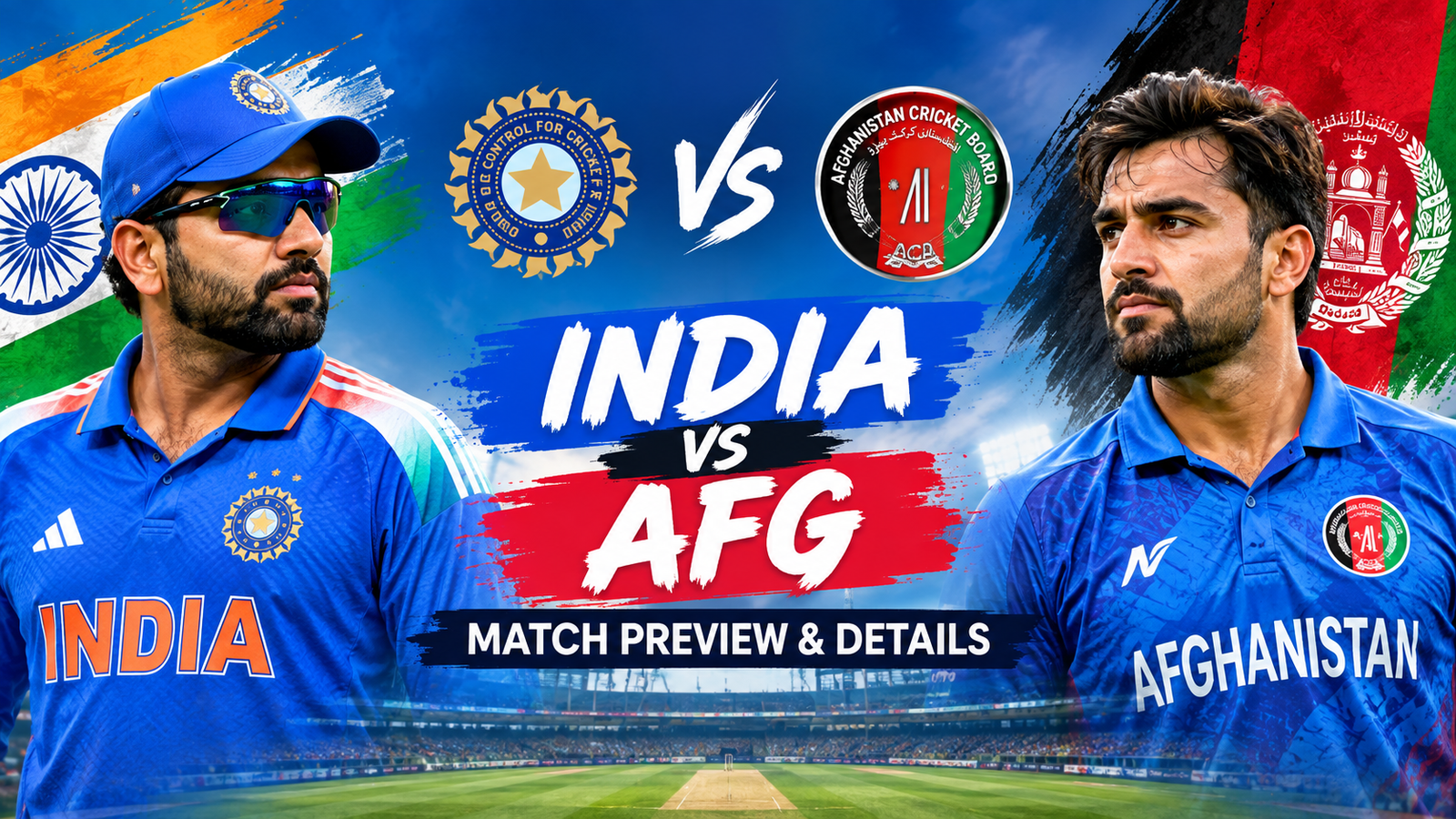
India vs Afghanistan was one of the most anticipated cricket matchups at the 2026 Asian Games, with the two teams meeting in the men’s T20 quarter-final at Korogi Sports Park in Nisshin, Japan. The organizers set the fixture for September 28, 2026, and India entered the tournament as defending Asian Games champions, giving the match major significance. Afghanistan, meanwhile, reached the knockout stage after finishing second in Group A.
Observers expected the match to provide another chapter in the growing cricket rivalry between India and Afghanistan. The two sides had already met several times across international cricket, with India holding a strong overall advantage. Their recent encounters had also produced some memorable performances, including India’s 3-0 T20I series victory over Afghanistan earlier in September.
India entered the Asian Games quarter-final under the leadership of Shreyas Iyer. The Indian squad included several experienced international players, including Jasprit Bumrah, Arshdeep Singh, Axar Patel, Washington Sundar, Sanju Samson, Ishan Kishan, Tilak Varma and Abhishek Sharma. The team also featured young players looking to make an impact on the international stage.
Afghanistan were led by Darwish Rasooli and arrived at the knockout stage after winning one of their group matches and losing another. Their squad contained a mixture of experienced players and emerging cricketers, although several of Afghanistan’s biggest international stars were not part of the Asian Games squad.
Officials abandoned the match at Korogi Sports Park after persistent rain prevented play. Under the tournament rules, India advanced to the semi-finals because of their superior ranking. Even though the anticipated cricket contest did not take place, the fixture remained an important part of the Asian Games cricket schedule and added another chapter to the history between the two sides.

India vs Afghanistan Match Details
Officials scheduled the India vs Afghanistan quarter-final for Monday, September 28, 2026. Organizers scheduled the second men’s cricket quarter-final of Asian Games to be played at Korogi Sports Park in Nisshin, Japan.
The scheduled start time was around 10:00 AM Indian Standard Time, with the local start time in Japan being around 1:30 PM. The timing allowed Indian viewers to follow the match during the daytime, while spectators in Japan could attend during the afternoon.
India entered the match directly at the quarter-final stage because of its tournament seeding. Afghanistan had to progress through the group stage before reaching the knockout round.
The organizers scheduled the fixture as a T20 match, so each team normally had a maximum of 20 overs. T20 cricket suits multi-sport events such as the Asian Games because matches finish within a relatively short period.
However, the weather in Nisshin became the defining factor. Rain had already affected cricket at the venue, and the wet conditions prevented the pitch and outfield from becoming suitable for play.
Venue: Korogi Sports Park
The organizers selected Korogi Sports Park in Nisshin, Japan, as a cricket venue for the 2026 Asian Games. Officials scheduled Korogi Sports Park to host several cricket matches during the tournament.
For India, playing in Japan represented a different experience from most of its international fixtures. Indian players regularly compete in major cricket venues across India and other established cricket-playing nations, but Japan offered a new environment and unfamiliar conditions.
Officials expected the pitch and surrounding conditions to provide an interesting challenge. Cricket at the Asian Games in Japan faced conditions that differed considerably from the familiar surfaces of India.
Teams needed to consider slow and low conditions. Batters accustomed to high-scoring T20 pitches could need to adjust their shot selection, while spinners could potentially become important if the surface offered grip.
The India-Afghanistan quarter-final failed to reach a stage where these conditions could be tested properly.
Weather Concerns Before the Match
Weather was one of the biggest talking points before the scheduled India vs Afghanistan quarter-final.
Rain had already affected matches at Korogi Sports Park, creating concerns about whether the ground would be ready for the scheduled fixture. The possibility of heavy rain was particularly important because a T20 match requires a sufficiently dry playing area for players to compete safely.
Ground staff faced the difficult task of protecting the playing surface while monitoring the weather. Even when rain stops temporarily, a wet outfield can prevent cricket from restarting because players need safe footing while running, batting, bowling and fielding.
The tournament also had a tight schedule, which limited the flexibility available for rescheduling matches. In knockout cricket, organizers need clear rules to determine which team advances if weather prevents a result.
For India and Afghanistan, the weather ultimately became more important than batting, bowling, tactics or individual performances.
India Entering the Asian Games
India arrived at the Asian Games with the objective of defending its men’s cricket gold medal.
Rain affected the final against Afghanistan, and the Indian men’s team won gold at the 2023 Asian Games in Hangzhou. India had received the gold medal under the tournament’s rules because of its higher seeding.
Three years later, India returned to the Asian Games with another strong squad and another opportunity to compete for the gold medal.
The team entered the tournament with significant T20 experience. Several players had recently participated in India’s bilateral T20I series against Afghanistan, providing them with fresh familiarity against the opposition.
India had also played a one-off T20I against hosts Japan before the Asian Games. The match gave the players some experience of local playing conditions, though rain shortened the fixture heavily.
India’s Recent T20I Series Against Afghanistan
The Asian Games quarter-final came only a short time after India and Afghanistan had completed a three-match T20I series in New Delhi.
India won all three matches of that series, completing a 3-0 sweep. The series provided a clear indication of India’s recent T20 strength and gave several Indian players valuable experience against Afghanistan.
The third T20I was particularly memorable because Abhishek Sharma produced a remarkable batting performance. He scored 108 runs from only 34 deliveries and reached his century from 30 balls, setting a new record for the fastest T20I hundred by a batter from a Full Member nation.
The series performance by India extended beyond batting. The bowling unit also performed strongly, with different bowlers contributing throughout the three matches.
Afghanistan therefore entered the Asian Games quarter-final looking to respond after the recent series defeat.
India Captain Shreyas Iyer
Shreyas Iyer was appointed captain of India’s men’s cricket team for the Asian Games campaign.
Selectors expected Iyer to provide leadership in a tournament where conditions could differ from India’s regular home series.
His role was particularly important because India had a combination of established international players and younger cricketers. A captain needs to manage different expectations while adapting quickly to unfamiliar playing conditions.
The team expected Iyer to contribute with the bat. His ability to anchor an innings while also accelerating during the middle and final overs made him an important part of India’s T20 setup.
The quarter-final would have been an opportunity for Iyer to lead India into another Asian Games knockout campaign, but the rain prevented him and the rest of the team from taking the field.
Abhishek Sharma as a Key Player
Abhishek Sharma was one of the most closely watched Indian players entering the tournament.
The left-handed opening batter had recently produced an extraordinary performance against Afghanistan in the T20I series in New Delhi. His 108 from 34 balls demonstrated his ability to score rapidly and put pressure on bowling attacks from the beginning of an innings.
His aggressive batting style made him particularly suited to T20 cricket. As an opening batter, he can influence the game during the powerplay by attacking fielding restrictions and forcing bowlers to change their plans.
Abhishek’s recent record against Afghanistan also gave him added significance heading into the Asian Games.
Had the quarter-final taken place, his battle against Afghanistan’s bowling attack would have been one of the major individual contests to watch.
Sanju Samson’s Role
Sanju Samson was another important name in India’s squad.
Samson provided experience as a wicketkeeper-batter and had recently contributed strongly in the T20I series against Afghanistan. He scored a half-century in the third match of that series and formed a highly productive opening partnership with Abhishek Sharma.
His ability to attack from the top order could have been valuable on a potentially slow Japanese surface.
As a wicketkeeper, Samson also offered India an experienced presence behind the stumps. In T20 cricket, wicketkeepers can have a major role in influencing field placements, reviewing dismissals and communicating with the captain.
The Asian Games would have provided Samson with another opportunity to contribute in both disciplines.
Ishan Kishan and the Indian Batting Depth
Ishan Kishan was also included in India’s squad.
The left-handed wicketkeeper-batter gave India another option in the top order and added further depth to the batting lineup.
Having multiple experienced batters allowed India to build a flexible T20 combination. The team could potentially change its batting order depending on the pitch, opposition bowling attack and match situation.
Kishan’s aggressive style could have been particularly useful during the powerplay, when fielding restrictions create opportunities for attacking batters.
With Samson and Kishan both available, India had substantial wicketkeeping and batting depth even before considering the other specialist batters in the squad.
Tilak Varma’s Importance
Tilak Varma was another important part of India’s batting group.
The left-handed batter had already established himself as a capable T20 player and provided India with a middle-order option.
Middle-order stability can become particularly important on slow pitches. If an opening pair scores quickly, a player like Tilak can continue the momentum. If early wickets fall, he can instead help rebuild the innings before accelerating later.
His ability to play both spin and pace would have been valuable against Afghanistan, whose bowling attack traditionally relies heavily on spin.
Tilak’s presence also gave India another left-handed batting option, creating variety within the lineup.
Shivam Dube’s All-Round Ability
Shivam Dube provided India with additional batting power and all-round flexibility.
His ability to contribute with both bat and ball can allow a T20 team to maintain balance. A player who can bowl a few overs gives the captain more options when managing the innings.
Dube’s powerful hitting is particularly useful during the middle and death overs. His height and strength allow him to generate significant power, especially against spin.
For India, having players capable of contributing in multiple disciplines helped create a deep squad.
Axar Patel and the Spin Department
Axar Patel was another key player in India’s squad.
The left-arm spinner is capable of bowling economically during the middle overs while also contributing useful runs with the bat.
On a potentially slow Japanese surface, spin could have been an important factor. Axar’s ability to bowl accurately and restrict scoring would have made him a valuable option against Afghanistan’s batting lineup.
His batting also gives India additional depth. When a team has several all-rounders, it can construct a lineup with more bowling options without weakening the lower order.
Axar therefore represented an important part of India’s balance.
Washington Sundar
Washington Sundar was another spin-bowling all-rounder available to India.
His off-spin could have been particularly useful against Afghanistan’s right-handed batters, while his batting ability gave India another option in the lower middle order.
Sundar has considerable experience in T20 cricket and has played in different conditions.
On a slow surface, his ability to bowl economically and vary his pace could have been useful.
Together with Axar Patel and Ravi Bishnoi, he gave India multiple spin options for the quarter-final.
Ravi Bishnoi
Ravi Bishnoi was another specialist spinner in India’s squad.
Bishnoi is known for his attacking leg-spin and variations, which can be difficult for batters to read in T20 cricket.
He has the ability to take wickets during the middle overs, an important phase because teams often attempt to accelerate during that period.
Afghanistan has historically produced several strong players of spin, so Bishnoi would have needed to vary his pace and trajectory carefully.
His inclusion strengthened India’s bowling options and provided another potential wicket-taking threat.
Jasprit Bumrah
Jasprit Bumrah was one of the biggest names in India’s Asian Games squad.
Bumrah is widely recognized for his effectiveness in T20 cricket, particularly because of his accuracy, pace variations and ability to bowl difficult deliveries during the death overs.
His experience would have been valuable in a knockout match.
Bumrah’s presence also gives a captain flexibility. He can bowl with the new ball, return during the middle overs when wickets are needed, or handle the pressure of the final overs.
Whether India would use him immediately in the quarter-final or manage his workload for the later stages was one of the selection questions surrounding the match.
Arshdeep Singh
Arshdeep Singh was another important pace option for India.
The left-arm fast bowler has significant T20 experience and has developed into an important member of India’s bowling attack.
His ability to swing the new ball and bowl yorkers at the death gives India two different phases in which he can make an impact.
Against Afghanistan, Arshdeep’s variations could have been useful against aggressive batters looking to score quickly.
Alongside Bumrah, he would have given India a highly experienced pace combination.
Afghanistan Entering the Quarter-Final
Afghanistan reached the quarter-final after finishing second in Group A.
The team won one group match and lost another, finishing behind Nepal in the group standings.
Afghanistan’s route through the tournament was therefore different from India’s. India entered directly at the quarter-final stage because of its seeding, while Afghanistan had to complete group-stage matches before reaching the knockout round.
The Afghan team was led by Darwish Rasooli.
The squad included several young players and emerging talents, creating an opportunity for a new generation of Afghan cricketers to gain experience in an international multi-sport tournament.
Afghanistan Captain Darwish Rasooli
Darwish Rasooli led Afghanistan during the Asian Games.
His role was particularly important because the squad did not contain several of Afghanistan’s biggest established international stars.
Rasooli had to lead a relatively young group against an experienced Indian team.
Captaincy in T20 cricket requires rapid decision-making. Field placements, bowling changes and batting orders can change quickly, leaving little room for hesitation.
The India match would have been one of the biggest tests of Rasooli’s leadership during the tournament.
Afghanistan’s Batting Lineup
Afghanistan’s batting group included experienced names such as Najibullah Zadran along with younger players.
Najibullah was one of the more experienced batters in the squad and could have played an important role in the middle and death overs.
Mohammad Ishaq was another important member of the team and was listed as the wicketkeeper.
Afghanistan needed its top and middle order to cope with India’s varied bowling attack. The Indian squad included high-quality pace and spin options, meaning Afghan batters would have needed to adapt quickly.
The absence of several established stars made this challenge even more significant.
Afghanistan’s Spin Options
Spin has traditionally been an important part of Afghanistan’s cricket identity.
The Asian Games squad included Nangeyalia Kharoti and Arab Gul Momand among its spin options.
Arab Gul Momand had produced an impressive bowling performance against Japan, taking four wickets. His form gave Afghanistan an emerging player to watch in the knockout stage.
Kharoti also provided another spin option and could have been important if the Nisshin surface offered assistance to slower bowlers.
Against India’s strong batting lineup, Afghanistan’s spinners would have needed to combine accuracy with wicket-taking ability.
Afghanistan Without Several Major Stars
One of the major differences between this Asian Games squad and Afghanistan’s strongest international T20 lineup was the absence of several prominent players.
Rahmanullah Gurbaz, Rashid Khan, Azmatullah Omarzai and Mohammad Nabi were among the established names not included in the Asian Games squad.
Their absence significantly changed the composition of the Afghan team.
The tournament therefore represented an opportunity for younger Afghan players to gain experience and demonstrate that the country’s cricket system has depth beyond its most famous international stars.
Against India, however, the lack of those experienced players created an additional challenge.
Head-to-Head Record
India has historically dominated Afghanistan in men’s international cricket.
Before the Asian Games quarter-final, the teams had met numerous times across formats, with India holding a substantial advantage.
In T20 internationals, India had won most of their previous meetings, while Afghanistan had yet to record a T20I victory over India.
The recent three-match T20I series in September further extended India’s advantage, as India won all three matches.
The head-to-head record therefore gave India considerable historical momentum, although knockout matches can produce different circumstances because conditions, squads and tournament formats vary.
The 2023 Asian Games Connection
The 2026 quarter-final also carried memories of the 2023 Asian Games.
India and Afghanistan met in the men’s cricket final at the Hangzhou Asian Games, but rain prevented a full contest.
India were awarded the gold medal because of their higher seeding under the competition rules.
The 2026 quarter-final therefore represented another meeting between the same cricketing nations in the Asian Games.
The unusual history of weather affecting India-Afghanistan Asian Games matches added an additional storyline to the 2026 fixture.
Unfortunately, rain again prevented the teams from playing.
India’s One-Off Match Against Japan
Before the Asian Games quarter-final, India played a one-off T20I against Japan.
The match was intended to help India adapt to local conditions and prepare for the tournament.
However, rain reduced the game to a five-over contest.
India scored 32 runs for four wickets, while Japan finished on 30 for three. India therefore won the shortened match by two runs.
Although the match did not provide the full 20-over preparation that India would have preferred, it gave the players some exposure to the venue and conditions.
The experience became particularly relevant when rain once again threatened the Afghanistan quarter-final.
Expected Indian Playing Combination
India’s squad gave the team several possible combinations.
At the top of the order, Abhishek Sharma, Sanju Samson and Ishan Kishan provided multiple options.
Shreyas Iyer was expected to anchor the middle order, with Tilak Varma and Shivam Dube providing additional batting depth.
Axar Patel and Washington Sundar could contribute both with bat and ball, while Ravi Bishnoi added specialist spin.
Jasprit Bumrah and Arshdeep Singh provided experienced pace options.
The exact XI would have depended on pitch conditions, player workload and the team’s tactical approach.
Expected Afghanistan Playing Combination
Afghanistan’s likely combination was built around Darwish Rasooli’s leadership, Mohammad Ishaq behind the stumps and experienced batter Najibullah Zadran.
Karim Janat provided all-round ability, while Nangeyalia Kharoti and Arab Gul Momand offered spin options.
The team also had several younger players who had earned their place through domestic and international performances.
Afghanistan needed to strike a balance between youth and experience, especially against a strong Indian squad.
Pitch Conditions
The Korogi Sports Park surface was expected to be different from the high-scoring pitches commonly seen in some major T20 venues.
Slow and low conditions can place greater emphasis on timing and shot selection.
Batters may need to wait for the ball rather than attempting to hit every delivery aggressively. Bowlers can also benefit from changes of pace and variations.
Spinners can become particularly useful when a pitch offers grip.
However, because rain prevented the match from beginning, the actual playing characteristics of the pitch could not be properly assessed during the India-Afghanistan quarter-final.
The Importance of the Toss
The toss would normally have been an important factor in a T20 knockout match.
Captains can decide whether to bat or bowl first based on pitch conditions, weather forecasts and the expected behavior of the surface.
On a potentially slow pitch, batting first can provide the opportunity to establish a competitive total. Alternatively, if conditions become easier for batting later, chasing could be attractive.
Weather conditions can also affect the decision.
In this case, the toss never took place because rain prevented the match from starting.
India’s Batting Strength
India entered the quarter-final with considerable batting depth.
The team had explosive openers, experienced middle-order players and all-rounders capable of contributing runs.
Abhishek Sharma’s recent record-breaking century against Afghanistan demonstrated the team’s ability to score at an extraordinary rate.
Sanju Samson had also shown strong form, while players such as Iyer, Tilak Varma and Dube gave India additional options.
The overall depth meant that India could theoretically maintain an attacking approach even after losing early wickets.
India’s Bowling Strength
India’s bowling attack was similarly well balanced.
Bumrah and Arshdeep offered pace, while Axar, Washington Sundar and Bishnoi provided spin.
This variety would have allowed India to change its strategy according to the conditions.
Against Afghanistan’s right- and left-handed batting combinations, the captain could have used different bowlers to create favorable matchups.
India’s bowling depth was one of the major reasons the team entered the tournament with strong expectations.
Afghanistan’s Bowling Challenge
Afghanistan’s bowling unit faced a difficult task against India’s deep batting lineup.
Without some of the country’s most experienced international bowlers, younger players had to take greater responsibility.
The Afghan spinners could have attempted to slow India’s scoring rate during the middle overs.
The fast bowlers and all-rounders also needed to make the most of powerplay and death-overs opportunities.
Against India’s aggressive batters, even small errors in line and length could have resulted in boundaries.
Afghanistan’s Opportunity
Despite India’s strong record, Afghanistan’s young squad had an important opportunity.
A knockout match against a leading cricket nation provides valuable experience for emerging players.
Afghanistan has developed a strong cricket culture and has produced international stars from a relatively young cricketing system.
The Asian Games gave younger players the chance to compete on a major multi-sport stage.
A successful performance against India could have provided valuable confidence for the next generation of Afghan cricketers.
What Fans Expected From the Match
Fans were expecting an entertaining T20 contest between two teams with very different recent circumstances.
India had a deep squad filled with experienced international players and had just completed a 3-0 T20I series win over Afghanistan.
Afghanistan had a younger lineup and an opportunity to challenge India without the pressure associated with a full-strength international series.
The quarter-final also offered a chance to see how India’s players would adapt to Japanese conditions.
Instead, fans had to wait for the outcome of the weather situation as persistent rain prevented the contest.
Rain Ends the Match
The India-Afghanistan quarter-final was eventually abandoned without a toss and without a single ball being bowled.
Persistent rain made the playing conditions unsuitable and prevented officials from starting the match.
The abandonment was particularly significant because the fixture was a knockout game. A normal group-stage match can sometimes be replayed or absorbed into a larger schedule, but knockout tournaments require clear advancement rules.
The Asian Games rules provided a solution based on team rankings.
India Advances to the Semi-Finals
Because the quarter-final was abandoned, India advanced to the semi-finals based on its superior ranking.
This meant India remained in contention for another Asian Games gold medal despite never playing Afghanistan in the quarter-final.
Afghanistan’s tournament therefore ended at the quarter-final stage.
The result was unusual because there was no scorecard in the traditional sense. No batter had an innings, no bowler took a wicket and no team completed an over.
The outcome was determined entirely by the tournament’s rules governing abandoned knockout matches.
A Familiar Story for India and Afghanistan
The result also created a remarkable connection with the 2023 Asian Games.
Three years earlier, rain had prevented India and Afghanistan from completing their gold-medal match.
In 2026, rain again prevented the two countries from playing an Asian Games knockout contest.
In both cases, India advanced or received the favorable tournament outcome because of its higher seeding or ranking.
The repeated weather interruptions made India-Afghanistan Asian Games history unusual compared with their regular bilateral cricket encounters.
India’s Gold Medal Defense Continues
With Afghanistan eliminated and India progressing, the Indian team continued its attempt to defend the Asian Games men’s cricket gold medal.
India had already won gold in the previous edition in which men’s cricket was contested.
The semi-final therefore became the next major target for Iyer’s team.
The players would also have to consider the unusual lack of match practice caused by rain. India had played only a shortened five-over match against Japan before the Afghanistan quarter-final was washed out.
That meant the team needed to maintain preparation and focus despite limited competitive cricket in Japan.
The Significance of the Asian Games
Cricket at the Asian Games provides an important international platform for teams from across Asia.
The competition allows countries with established cricket systems to meet emerging cricket nations in a multi-sport environment.
For India, Afghanistan and other cricket-playing countries, the tournament provides an opportunity to win medals while representing their nations at a major continental sporting event.
The inclusion of cricket also helps expand the sport’s visibility in countries where it has historically had a smaller presence.
Japan’s hosting of the 2026 Asian Games therefore provided a new setting for international cricket.
Why IND vs AFG Was Highly Anticipated
The India-Afghanistan matchup attracted attention for several reasons.
The first was India’s status as the defending champion.
The second was the recent 3-0 T20I series between the two teams, which had produced several high-scoring and memorable moments.
The third was the history of close encounters between Afghanistan’s talented players and India’s experienced squad.
Finally, the Asian Games setting added a unique dimension because the teams were competing for a place in the medal rounds.
All of these factors made the quarter-final one of the most closely followed cricket fixtures of the Asian Games.
The Role of Young Players
Both teams were also using the tournament to expose younger players to high-level international competition.
India included teenage batting talent Vaibhav Sooryavanshi among its squad. The young player had already attracted attention after becoming the youngest player to represent India in men’s T20I cricket.
Afghanistan also had several emerging players in its squad.
These young cricketers represented the future of their respective national teams.
Although rain prevented them from competing against each other in the quarter-final, the Asian Games remained an important stage for their development.
India’s Experience Advantage
India’s squad contained a significant amount of international experience.
Players such as Bumrah, Arshdeep, Axar Patel, Washington Sundar, Sanju Samson and Shreyas Iyer had all played high-level international cricket.
That experience can be particularly valuable in knockout competitions where individual moments often determine outcomes.
India’s players were also familiar with the pressure of representing the country in major tournaments.
Afghanistan’s younger squad faced a different situation, with several players gaining experience at this level for the first time.
Afghanistan’s Long-Term Development
The Asian Games were nevertheless valuable for Afghanistan’s long-term development.
The country has established itself as a competitive international cricket nation, particularly in T20 cricket.
Developing younger players is important because Afghanistan’s senior stars cannot play every tournament.
Players such as Darwish Rasooli, Mohammad Ishaq and Arab Gul Momand gained exposure to a major international event.
Even though Afghanistan did not get the opportunity to play India because of rain, participation in the tournament remained valuable for the team’s future.
The Importance of Tournament Rules
The abandoned match also demonstrated why tournament rules are essential.
In knockout cricket, organizers need a clear system for deciding which team advances when weather prevents a match.
The Asian Games used ranking criteria in this situation.
India’s superior ranking allowed it to move into the semi-finals rather than requiring a replay that the tournament schedule might not have been able to accommodate.
Such rules can sometimes produce unusual outcomes, but they are designed to provide certainty when external circumstances prevent competition.
What the Abandonment Meant for the Players
For players, an abandoned match can be frustrating because months of preparation may lead to a day when no cricket is possible.
India’s players were prepared to begin their Asian Games campaign with a quarter-final against Afghanistan.
Afghanistan’s players had also worked through the group stage to reach the knockout round.
Neither team could demonstrate its batting, bowling or fielding abilities because the weather prevented play.
The players instead had to focus on the next stage or, in Afghanistan’s case, the end of their tournament.
India’s Preparation for the Semi-Final
India’s progression meant that the team could turn its attention toward the semi-final.
The coaching staff had to manage the squad carefully because the team had experienced limited competitive action in Japan.
Players could use training sessions to maintain rhythm and adapt to local conditions.
The absence of a full quarter-final also meant India’s key players had not been required to spend energy in a competitive match.
At the same time, match practice remained limited, making preparation particularly important.
Overall IND vs AFG Match Story
The India vs Afghanistan Asian Games quarter-final began as a highly anticipated T20 matchup but ended as a weather-affected fixture without a ball being delivered.
India entered as the defending champion and one of the tournament’s most experienced teams.
Afghanistan entered the knockout round with a younger squad and the ambition of challenging India after a difficult recent T20I series.
The weather, however, became the central story.
Persistent rain prevented the toss and eventually forced the match to be abandoned. Under the Asian Games regulations, India advanced because of its higher ranking.
Final Thoughts
The IND vs AFG Asian Games 2026 quarter-final was expected to be a fascinating T20 contest between two teams with very different squads and tournament backgrounds.
India arrived with a strong combination of experienced international players, young talent, pace bowling, spin options and powerful batting. Shreyas Iyer led a squad that included Abhishek Sharma, Sanju Samson, Ishan Kishan, Tilak Varma, Shivam Dube, Axar Patel, Washington Sundar, Ravi Bishnoi, Jasprit Bumrah and Arshdeep Singh.
Afghanistan were led by Darwish Rasooli and had a younger group featuring players such as Mohammad Ishaq, Najibullah Zadran, Karim Janat, Nangeyalia Kharoti and Arab Gul Momand.
The match was also connected to the recent T20I rivalry between the teams. India had completed a 3-0 series sweep earlier in September, with Abhishek Sharma producing a record-breaking 108 from 34 balls in the final match.
Despite all the anticipation, cricket was ultimately not possible in Nisshin. Persistent rain prevented the quarter-final from starting, and the match was abandoned without a toss or a ball being bowled.
India advanced to the semi-finals under the Asian Games’ ranking rules, while Afghanistan’s campaign ended at the quarter-final stage. The outcome created another unusual chapter in the Asian Games history of India and Afghanistan, following the rain-affected 2023 final between the same teams.
Although there was no scorecard, no individual performance and no on-field winner in the traditional sense, the fixture remained significant. India continued its gold-medal defense, while Afghanistan’s young squad gained experience from participating in another major international tournament.
The IND vs AFG matchup therefore became a story not of boundaries, wickets and dramatic finishes, but of tournament history, preparation, changing cricket conditions and the decisive impact of weather on international sport.
For More Information About Article, Click Here.
For More Articles, Click Here.