
Introduction
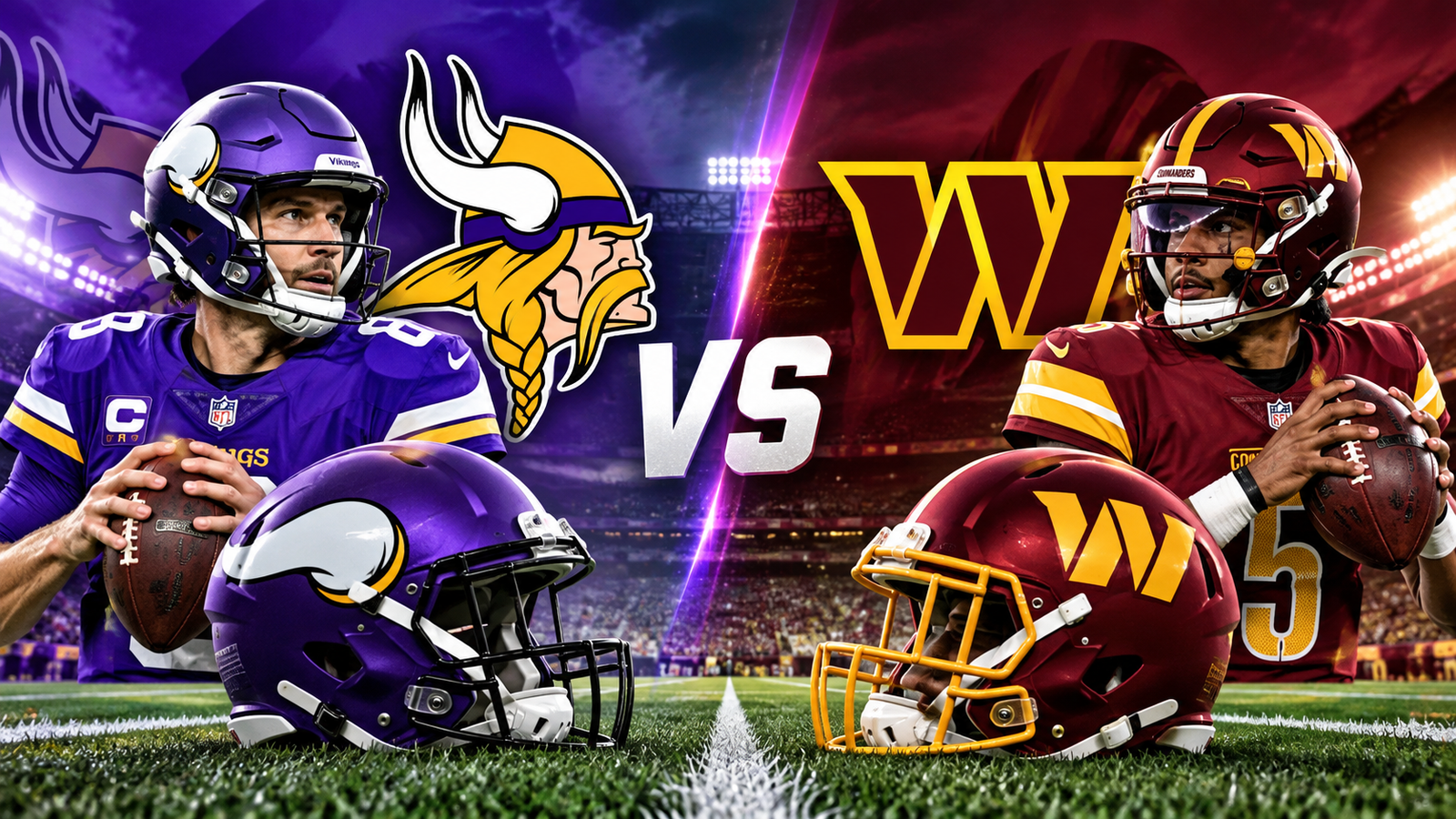
The Minnesota Golden Gophers and Washington Huskies met in a highly anticipated Big Ten matchup on Saturday, September 26, 2026, at Husky Stadium in Seattle. The game marked the beginning of conference play for both programs and was one of the most notable matchups of Week 4 in the 2026 college football season. Minnesota entered the contest with a 2-1 record, while Washington was unbeaten at 3-0.
The matchup carried additional significance because Washington and Minnesota had not faced each other since 1977. Although the two programs had a long history dating back to the 1930s, their schedules had kept them apart for nearly five decades. Their return matchup also came after Washington joined the Big Ten, making this their first meeting as conference opponents.
Minnesota traveled west after finishing its nonconference schedule with a convincing 41-7 victory over Akron. Washington entered its Big Ten opener after winning its first three games against Washington State, Utah State, and Eastern Washington. The Huskies had remained unbeaten while preparing for their first conference test of the season.
The game was scheduled for 8 p.m. Pacific Time and 10 p.m. Central Time at Husky Stadium. FOX carried the national television broadcast. With Washington playing its fourth consecutive home game to begin the season, Minnesota faced a challenging road environment in Seattle.
Minnesota vs Washington Game Details
The matchup took place at Husky Stadium in Seattle, Washington, the home venue of the Washington Huskies. The stadium has a listed capacity of 70,138 and is known for its distinctive setting near Lake Washington. The September 26 meeting represented Minnesota’s first trip to the stadium since the teams last played there in 1976.
Kickoff was scheduled for 8 p.m. Pacific Time, 10 p.m. Central Time, and 11 p.m. Eastern Time. The late start was particularly notable for Minnesota because the Gophers were traveling from the Central time zone to the West Coast for one of the latest kickoffs on their 2026 schedule.
FOX was the television network for the game, giving the matchup a national audience. Minnesota’s official game information also listed the Gopher Radio Network for audio coverage, while Washington provided its own radio and live-stat options through its athletic department.
The game was part of Week 4 of the 2026 college football season and served as the Big Ten opener for both teams. Washington entered conference play ranked No. 23 in the national rankings, while Minnesota came into the matchup with a 2-1 record.
Minnesota Golden Gophers Entering the Game
Minnesota entered the Washington matchup at 2-1. The Gophers had opened the season with wins over Eastern Illinois and Akron, while suffering a loss to Mississippi State. Their final nonconference game was especially impressive, as Minnesota defeated Akron 41-7.
The Gophers had shown two very different sides of their team during the opening three games. Their victories over Eastern Illinois and Akron were dominant, while the loss to Mississippi State exposed some areas that Minnesota needed to improve before beginning Big Ten competition.
Quarterback Drake Lindsey was one of the central figures in Minnesota’s early-season performance. Through three games, the junior quarterback had completed 67 of 103 passes for 747 yards, four touchdowns, and one interception. His passing efficiency and accuracy made him an important part of Minnesota’s offensive approach heading into Seattle.
Minnesota also had a productive rushing attack. Running back TJ Thomas had recorded 173 rushing yards through the first three games on only 25 carries. His average of 7.5 yards per carry gave the Gophers another offensive option and provided balance alongside Lindsey’s passing game.
Washington Huskies Entering the Game
Washington entered the matchup with a perfect 3-0 record. The Huskies had opened the season by defeating Washington State 24-10, Utah State 16-14, and Eastern Washington 48-16. Those results gave Washington momentum heading into its first Big Ten contest of the season.
The Huskies had the advantage of playing all three of their opening games at home, and the Minnesota game was also scheduled for Husky Stadium. That meant Washington began the 2026 campaign with four consecutive home contests before its first road game, which was scheduled at USC the following week.
Quarterback Demond Williams Jr. was one of Washington’s most important offensive players. His athletic ability gave the Huskies an additional dimension because he could contribute through both passing and rushing. Washington also had wide receiver Dezmen Roebuck as a significant receiving threat.
Washington’s 48-16 victory over Eastern Washington in its previous game provided an encouraging offensive performance. However, the Minnesota game represented a significant step up in competition because it was the Huskies’ first Big Ten matchup of the year.
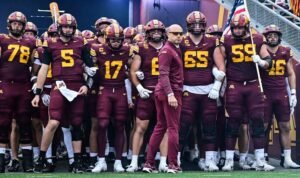
Drake Lindsey and the Minnesota Offense
Drake Lindsey was one of the key players to watch for Minnesota. The 6-foot-5 junior quarterback had continued to develop after taking over the starting role and entered the Washington game with strong early-season statistics.
Through three games, Lindsey had completed 67 of 103 attempts for 747 yards. He had thrown four touchdowns and only one interception. His interception percentage was particularly notable, and Minnesota’s official game notes highlighted his strong touchdown-to-interception record during his time as the Gophers’ starter.
Lindsey had also demonstrated the ability to produce multiple touchdown passes in a game. Against Akron, he completed 17 of 31 passes for 204 yards and three touchdowns. The interception he threw in that game ended a school-record streak of 232 consecutive passes without an interception.
Against Washington, Lindsey faced a defense that had benefited from playing at home and had already helped the Huskies remain unbeaten. His ability to make accurate throws while dealing with Washington’s defensive pressure was one of the central factors surrounding the matchup.
TJ Thomas and the Ground Game
Minnesota’s running game was another important part of its offensive identity. TJ Thomas had produced 173 rushing yards through the first three games, averaging 7.5 yards per carry.
A productive rushing attack can help an offense in several ways. It can create manageable down-and-distance situations, reduce pressure on the quarterback, and force a defense to account for multiple offensive threats.
Thomas’ early-season production gave Minnesota a legitimate rushing option alongside Lindsey. If the Gophers could establish the run, they would have greater flexibility in their offensive play calling.
The Washington defense therefore had to prepare for both Minnesota’s passing and rushing attacks. Preventing the Gophers from creating explosive plays on the ground was an important part of the defensive challenge.
Javon Tracy and Minnesota Special Teams
Special teams were another major strength for Minnesota entering the matchup. Javon Tracy had been one of the most productive punt returners in college football during the opening weeks of the season.
According to Minnesota’s official game notes, Tracy had accumulated 251 punt return yards, more than any other team in the nation at that point. He had also returned two punts for touchdowns against Eastern Illinois in the season opener.
Tracy’s impact extended beyond his two return touchdowns. He had three punt returns of at least 60 yards during the early portion of the season, while Minnesota ranked fourth nationally in punt return average as a team.
The Gophers also had strong placekicking production. Luke Drzewiecki had made all four of his field-goal attempts entering the Washington game, including three from at least 40 yards. Tom Weston had also averaged 43 yards per punt.
Washington’s Offensive Challenge
Washington entered the game with an unbeaten record, but the Huskies’ early schedule had produced some relatively close contests. Their 16-14 victory over Utah State was decided by only two points, while their 24-10 win over Washington State was also controlled by the defense rather than an overwhelming offensive performance.
That made the Minnesota game an important test for Washington’s offense. The Gophers had already shown that they could score heavily against weaker opponents, and the Huskies needed to find ways to create consistent production against a Big Ten opponent.
Demond Williams Jr. was particularly important because of his ability to make plays outside the traditional structure of an offense. His mobility could create problems for Minnesota’s defense if Washington’s passing lanes became difficult.
Washington also needed contributions from its receiving group. Dezmen Roebuck had already demonstrated his ability to make significant plays, including a nine-catch, 121-yard performance against Eastern Washington.
Washington’s Defensive Test
The Washington defense faced one of its more important challenges of the early season against Minnesota.
Minnesota entered the game with a quarterback who had already demonstrated strong efficiency and a running game capable of producing explosive gains. Washington therefore needed to limit both the passing game and the Gophers’ rushing attack.
The Huskies had the benefit of playing at home, where crowd noise and familiarity with the environment can be important factors. Minnesota’s offense also had to deal with the challenges associated with traveling across multiple time zones.
Washington’s defensive performance was especially important because the game was expected to be competitive. Limiting explosive plays and forcing Minnesota into long drives would be key defensive objectives.
The Historical Series
Minnesota and Washington had a long but relatively infrequent history against one another. The first meeting occurred on September 26, 1936, in Seattle, with Minnesota winning 14-7.
Entering the 2026 game, Minnesota held a 10-7 advantage in the all-time series. The teams had not played since October 1, 1977, when Minnesota won 19-17 in Minneapolis.
The previous meetings also included a 38-7 Washington victory in 1976 and a 17-7 Washington win in 1961. The historical series had therefore produced a mixture of close contests and more decisive victories.
The long gap between meetings made the 2026 matchup particularly unusual. The two programs had both changed significantly since their previous meeting, and their return matchup occurred in an entirely different conference landscape.
First Big Ten Meeting
One of the most important details surrounding Minnesota vs Washington was that it was the first meeting between the programs as Big Ten conference opponents.
Washington became part of the Big Ten as part of the conference’s major expansion, bringing the Huskies into regular competition with programs from the Midwest and other regions of the country.
Minnesota had been a long-established Big Ten member, so the matchup represented a meeting between a traditional conference program and a relatively new Big Ten member.
The conference implications were significant because the game counted toward each team’s Big Ten schedule. A strong start to conference play could provide an important foundation for the rest of the season.
P.J. Fleck’s Minnesota Program
Minnesota was coached by P.J. Fleck, who entered his 10th season leading the Gophers in 2026.
Fleck had built considerable continuity within the Minnesota program. According to the university’s game notes, he entered the matchup with a 68-45 record at Minnesota and 39 Big Ten victories. He was also approaching 100 career FBS victories as a head coach.
The Washington game represented another significant conference test for Fleck. Minnesota had experience playing difficult road games, including late-night contests away from home, but traveling to Seattle for a Big Ten opener created a unique challenge.
Fleck’s teams have often emphasized physical play, discipline, special teams, and strong defensive performances. Those areas were particularly relevant against Washington because the Huskies had home-field advantage and an athletic quarterback.
Jedd Fisch and Washington
Washington entered the game under head coach Jedd Fisch.
Fisch was tasked with continuing Washington’s development as a Big Ten program while maintaining the competitive standards associated with the Huskies’ recent football history.
Washington had started the 2026 season 3-0, giving Fisch and his team an opportunity to enter conference play with confidence.
The Minnesota game was also an important transition point because the Huskies were moving from a nonconference schedule into a Big Ten schedule that included teams such as USC, Iowa, Purdue, Nebraska, Penn State, Michigan State, Indiana, and Oregon.
The Importance of Home Field
Husky Stadium was an important part of the matchup.
Washington had played its first three games of the 2026 season at home and was scheduled to host Minnesota for its fourth consecutive home contest. The Huskies therefore entered conference play without having to travel during the opening month of the season.
Minnesota, on the other hand, had to travel to Seattle and play at a late local time from the perspective of its home region.
The atmosphere at Husky Stadium was expected to create a difficult environment for the visiting Gophers. Communication between the quarterback and offensive line can become more challenging in loud road environments, particularly during important third downs and passing situations.
Travel and Late Kickoff
The late kickoff was one of the most unusual aspects of the game.
For Minnesota, the game began at 10 p.m. Central Time. For Washington, the local kickoff was 8 p.m. Pacific Time. For viewers on the East Coast, the game began at 11 p.m. Eastern Time.
Minnesota’s official game notes pointed out that the 10 p.m. Central kickoff was the Gophers’ latest since a 10 p.m. kickoff at UNLV in 2012.
Late-night road games can introduce different preparation challenges. Teams have to maintain concentration throughout the day, manage meals and rest schedules, and adapt to unusual game-day routines.
For Minnesota, the ability to maintain focus throughout the late kickoff was therefore one of the logistical details surrounding the matchup.
What Made the Matchup Interesting
Several factors made Minnesota vs Washington an intriguing Week 4 game.
First, the teams entered with different records. Washington was 3-0, while Minnesota was 2-1. That created a contrast between an unbeaten home team and a Gophers squad that had already experienced both dominant victories and a difficult loss.
Second, the game marked the beginning of Big Ten competition for both programs. Conference games generally carry greater significance because they affect the league standings and the path toward postseason opportunities.
Third, the historical gap between the teams added another storyline. Minnesota and Washington had not met since 1977, meaning most modern players and coaches had no experience in this series.
Finally, the matchup featured contrasting strengths. Minnesota had strong early production from its quarterback and special teams, while Washington entered with an unbeaten record, home-field advantage, and a talented offensive quarterback.
Key Matchup: Lindsey vs Washington’s Defense
One of the central individual battles was Minnesota quarterback Drake Lindsey against Washington’s defense.
Lindsey entered the game having thrown four touchdowns and only one interception through three games. He had also shown that he could produce big performances through the air, including three touchdown passes against Akron.
Washington’s defense needed to prevent Lindsey from getting comfortable in the pocket. Pressure could disrupt Minnesota’s timing and force the Gophers into difficult passing situations.
At the same time, Minnesota’s offensive line needed to give Lindsey enough time to identify defensive coverage and find open receivers.
The result of that battle had the potential to influence the entire game because Minnesota’s offense relied heavily on Lindsey’s decision-making and accuracy.
Key Matchup: Demond Williams Jr. vs Minnesota’s Defense
The other major individual matchup involved Washington quarterback Demond Williams Jr.
Williams brought a combination of passing ability and mobility that required Minnesota’s defense to maintain discipline. A quarterback capable of escaping pressure can turn broken plays into significant gains.
Minnesota’s defensive front therefore needed to maintain its assignments rather than simply pursuing the quarterback aggressively.
The Gophers also needed to limit Williams’ ability to extend plays outside the pocket. Preventing easy first downs and controlling Washington’s quarterback run threat were important parts of the defensive plan.
Key Matchup: Special Teams
Special teams represented another potential difference-maker.
Minnesota entered the game with one of the country’s strongest punt-return units, led by Javon Tracy. A long return could immediately change field position and create an opportunity for the Gophers’ offense.
Washington needed to limit Minnesota’s return opportunities and avoid giving Tracy open space.
Field position was particularly important in a matchup between two teams that had shown the ability to play strong defense. A team that consistently started drives closer to midfield could reduce the distance required to score.
Minnesota’s Path to Success
For Minnesota, establishing balance was an important objective.
The Gophers needed TJ Thomas and the rushing attack to remain productive so Washington could not focus entirely on Lindsey and the passing game.
Minnesota also needed to protect the football. Turnovers can have a major effect on road games, especially when the visiting team is facing a ranked opponent.
Special teams provided another potential advantage. If Tracy could create strong field position, Minnesota could shorten the field for its offense and place additional pressure on Washington.
Defensively, Minnesota needed to contain Williams and prevent Washington from producing easy explosive plays.
Washington’s Path to Success
Washington’s approach centered around using its home-field advantage while creating consistent offensive production.
The Huskies needed to protect the football, establish enough offensive rhythm to avoid relying entirely on their defense, and make Minnesota defend the entire field.
Washington also needed to account for Minnesota’s special teams. Giving the Gophers short fields through poor punt coverage could allow Minnesota to stay competitive even if Washington controlled long stretches of offensive play.
Defensively, the Huskies needed to slow Lindsey and prevent Minnesota from producing the kind of efficient offensive drives that could keep the game close.
Pre-Game Records
The records entering the game were straightforward. Minnesota was 2-1, while Washington was 3-0. Washington was ranked No. 23 entering the matchup, while Minnesota was outside the AP Top 25.
Minnesota’s most recent game before the matchup was a 41-7 victory over Akron. Washington’s most recent game was a 48-16 victory over Eastern Washington.
Those results gave both teams confidence entering conference play, although the quality of the opponents meant that the Minnesota game represented a different level of competition for Washington.
For Minnesota, the challenge was to translate the positives from its nonconference schedule into a difficult Big Ten road environment.
The 2026 Big Ten Context
The Minnesota-Washington matchup was part of a broader change in the Big Ten’s national footprint.
Washington’s move into the conference meant that traditional Big Ten programs such as Minnesota would now make regular trips to the Pacific Northwest.
The matchup therefore represented more than an isolated nonconference-style meeting. It was part of the new conference schedule and a new era of regular competition between programs that had previously met only occasionally.
For fans, this created opportunities to see unfamiliar opponents and travel to new venues. For teams, it introduced new logistical and competitive challenges.
Game Atmosphere in Seattle
The atmosphere at Husky Stadium was expected to be one of the notable features of the matchup.
Washington had started the season with three straight home games and had won all three. The Minnesota game continued that home stretch and gave the Huskies another opportunity to play in front of their home crowd.
For Minnesota, the stadium environment was very different from a typical home game at Huntington Bank Stadium in Minneapolis.
The combination of a late kickoff, long-distance travel, and a loud home crowd made preparation important for the Gophers.
Weather and Playing Conditions
The game was played in Seattle in late September, a period when temperatures are generally moderate compared with many other parts of the country.
Pre-game reports indicated conditions that were not expected to create a major weather disruption. The primary environmental challenge for Minnesota was therefore the road environment and late kickoff rather than extreme heat, cold, or severe weather.
Husky Stadium’s AstroTurf surface also provided a consistent playing surface for both teams.
With no major weather concerns expected, the matchup was primarily expected to be decided by execution, field position, turnovers, and performance in the key offensive and defensive matchups.
Why This Game Was Important for Minnesota
The Minnesota game represented an opportunity for the Gophers to establish themselves early in Big Ten play.
After going 2-1 in the nonconference portion of the schedule, Minnesota needed to demonstrate that it could compete against a ranked conference opponent on the road.
A strong performance in Seattle would also provide momentum for the remainder of the Big Ten schedule.
The Gophers had several experienced players and a quarterback who had performed well during the opening games. The Washington matchup provided a much stronger test of how those pieces would perform against a quality conference opponent.
Why This Game Was Important for Washington
For Washington, the matchup represented its first true Big Ten test of the season.
The Huskies had won their first three games, but all three had been played at home against nonconference opponents. Minnesota presented a different challenge because the Gophers had a physical style and a productive passing game.
Starting conference play with a strong performance was important for Washington’s broader season goals.
The Huskies also had a demanding schedule ahead, including a road game at USC immediately after the Minnesota matchup. That made the opening conference game an important early test.
What Fans Could Watch For
Fans watching Minnesota vs Washington had several individual and team storylines to follow.
Drake Lindsey was one of the most obvious players to watch for Minnesota. His ability to make accurate throws and avoid turnovers was central to the Gophers’ offense.
TJ Thomas was another player to monitor because Minnesota’s rushing success could determine how balanced the offense remained.
For Washington, Demond Williams Jr. was the central offensive player. His ability to create plays through both his arm and legs made him a difficult assignment for Minnesota.
Javon Tracy also deserved attention because of his potential to influence the game without taking offensive snaps. A major punt return could immediately change the field-position battle.
The Result
The Minnesota-Washington matchup ultimately produced a 27-24 Minnesota victory in Seattle. The Gophers overcame the Huskies on the road in a game that remained competitive throughout.
Drake Lindsey played a major role in Minnesota’s victory, throwing three touchdown passes in the first half to three different receivers. The Gophers’ defense also produced a strong performance, recording seven sacks and two interceptions against Washington.
The result gave Minnesota a major road victory to begin Big Ten play and ended Washington’s unbeaten start to the season.
The 27-24 score also continued the history of competitive games between these programs. Minnesota entered the contest leading the all-time series 10-7 and added another victory to its advantage.
Final Takeaway
Minnesota vs Washington was one of the most interesting Big Ten matchups of Week 4 because it combined history, conference realignment, an unbeaten home team, and a challenging road assignment for the Gophers.
Washington entered the game 3-0 and ranked No. 23, while Minnesota came in at 2-1 after a dominant victory over Akron. The Huskies had home-field advantage and were playing their fourth consecutive game in Seattle, while Minnesota had to travel across the country for a 10 p.m. Central kickoff.
The matchup also revived a series that had been dormant for almost 50 years. Minnesota and Washington last met in 1977, and their first meeting had taken place in Seattle in 1936. The 2026 contest was their first as Big Ten opponents.
On the field, Minnesota’s quarterback play, defensive pressure, and overall execution proved decisive. Lindsey threw three first-half touchdown passes, while the Gopher defense produced seven sacks and two interceptions. Minnesota ultimately left Seattle with a 27-24 victory.
The game therefore became an important chapter in the history of both programs and an early example of the new conference matchups created by Washington’s place in the Big Ten. Minnesota’s victory provided a strong start to conference play, while Washington was left to regroup before continuing its demanding 2026 schedule.
For More Information About Article, Click Here.
For More Articles, Click Here.